Request an Appointment or Give Us a Call
What is Shoulder Reconstruction Surgery?
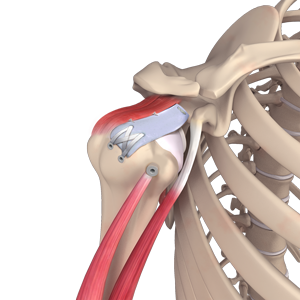
Shoulder reconstruction surgery is an operative procedure in which stretched or torn soft-tissue structures that surround the shoulder joint such as the capsule, ligaments, and cartilage, are repaired to secure the shoulder joint in place. The procedure is mainly employed for the treatment of individuals with shoulder instability, to prevent recurrent joint dislocations, and to restore normal shoulder range of motion and function.
Shoulder instability is a chronic condition that causes the frequent dislocation of the shoulder joint. This occurs when the structures surrounding the shoulder joint are unable to retain the upper end of the humerus (ball portion) in the glenoid (socket portion) of the shoulder due to an injury or tear. A partial dislocation is referred to as a subluxation, while a complete separation is a dislocation. The repeated dislocation of the humerus out of its socket is called chronic shoulder instability. A tear in the labrum or rotator cuff and ligament tear in the front of the shoulder (a Bankart lesion) may lead to repeated shoulder dislocations.
What is Shoulder Anatomy?
The shoulder joint is a ball-and-socket joint, where the head of the humerus (upper arm bone) articulates with the socket of the scapula (shoulder blade), called the glenoid. The two articulating surfaces of the bones are covered with cartilage, which prevents friction between the moving bones, and enables smooth movement. Tendons and ligaments around the shoulder joint provide strength and stability to the joint. The joint is stabilized by the labrum, a cartilaginous rim of the glenoid cavity, and the capsule, a series of ligaments that enclose the joint. Injury and trauma can tear or stretch the labrum and/or ligaments, causing instability and dislocation of the joint.
What are the Indications for Shoulder Reconstruction Surgery?
If non-surgical remedies such as prescription medications, physical or occupational therapy, immobilization, and closed reduction or manipulation fail to relieve shoulder instability, your surgeon may recommend shoulder reconstruction surgery.
What is the Procedure for Shoulder Reconstruction Surgery?
Shoulder reconstruction surgery is usually performed arthroscopically with small incisions and tiny surgical instruments.
Arthroscopic surgery is a minimally invasive procedure and is performed through tiny incisions (portals), about a half-inch in length, made around the joint area. Through one of the incisions, an arthroscope (a small fiber-optic viewing instrument) is passed. A camera attached to the arthroscope displays the images of the inside of the joint on a monitor, which allows your surgeon to view the cartilage, ligaments, and rotator cuff while performing the procedure. A sterile saline solution is pumped into the joint, which expands it and provides a clearer view. Bone spurs, defects, or tissue tears will be identified.
Your surgeon makes use of tiny surgical instruments that are passed through the other incisions to treat the condition. The torn or stretched soft-tissue structures around the shoulder joint such as ligaments or the labrum will be sutured or stapled. The sutures are held in place with help of a small anchor that is drilled into the upper part of the humerus. Further, a thermal shrinkage device may be used in order to tighten the ligaments and prevent instability. Upon completion, the scope and instruments are withdrawn, and the incisions are closed and bandaged.
What Does Post-operative Care for Shoulder Reconstruction Surgery Involve?
In general, post-operative care instructions and recovery after shoulder reconstruction surgery will involve the following steps:
- You will be transferred to the recovery area where your nurse will closely observe you for any allergic/anesthetic reactions and monitor your vital signs as you recover.
- You may need to stay in the hospital for a day or two before discharge.
- You may notice pain, swelling, and discomfort in the shoulder area. Pain and anti-inflammatory medications, as well as the application of ice packs are recommended as needed.
- Your arm will be secured with assistive devices such as a sling for 4 to 6 weeks to facilitate healing with instructions on restricted weight-bearing.
- Keep the surgical site clean and dry. Instructions on surgical site care and bathing will be provided.
- Refrain from smoking as it can hinder the healing process.
- Refrain from strenuous activities for the first few months and lifting heavy weights for at least 6 months. Gradual increase in activities over a period of time is recommended.
- An individualized physical therapy protocol will be designed to help strengthen shoulder muscles and optimize shoulder function.
- Most patients are able to resume their normal activities in a month or two after surgery; however, a return to sports may take 6 to 12 months.
- Refrain from driving until you are fully fit and receive your doctor’s consent.
- Periodic follow-up appointments will be scheduled to monitor your progress.
What are the Risks and Complications of Shoulder Reconstruction Surgery?
Shoulder reconstruction surgery is a relatively safe procedure; however, as with any surgery, some risks and complications may occur, such as the following:
- Infection
- Bleeding
- Anesthetic/allergic reactions
- Injury to nerves and blood vessels
- Blood clots or deep vein thrombosis (DVT)
- Pain/swelling
- Stiffness or restricted motion
- Muscle weakness
- Recurrence of instability
- Failure of the reconstruction
For more information about our services or to schedule an appointment, call us at or click here to request an appointment online. We’ll respond to you as soon as possible.